Welcome to longxiang photoelectric official website

 My position:
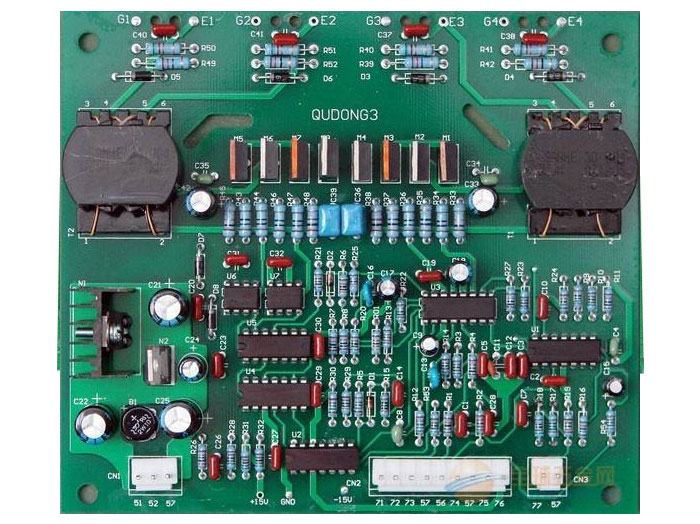
The manufacturing method of the multilayer circuit board is generally performed by the inner layer pattern, and then formed into a single-sided or double-sided substrate by a printing etching method, and is incorporated into a specified layer, and then heated, pressurized, and bonded, as after The drilling is the same as the plated through hole method of the double panel. These basic methods of production have not changed much from the methods of the 1960s, but they are more mature with materials and process technologies (such as: press-bonding technology, solution to mold, and film improvement). The characteristics of the multilayer board are more diverse.
Plated through hole
Primary copper
After the interlayer via is formed, a metal copper layer needs to be disposed thereon to complete the conduction of the interlayer circuit. First clean the pores on the hole and the dust in the hole by heavy brushing and high-pressure rinsing, and then remove the slag on the copper surface of the hole wall with potassium permanganate solution. The tin-palladium colloid layer is immersed on the cleaned pore wall and then reduced to metal palladium. The circuit board is immersed in a chemical copper solution, and the copper ions in the solution are reduced and deposited on the pore walls by the catalytic action of palladium metal to form a through-hole circuit. The copper layer in the via hole is then thickened by copper sulfate bath plating to a thickness sufficient to resist subsequent processing and environmental impact.
Outer line
Secondary copper
In the production of line image transfer, it is like the inner layer circuit, but in the line etching, it is divided into two production modes: positive film and negative film. The negative film is produced in the same way as the inner layer. After the development, the copper is directly etched and the film is removed. The positive film is produced by adding secondary copper and tin-lead after development (the tin-lead in this area will be retained as an etch stop in the later copper etching step), and the film is alkaline after removing the film. A mixture of ammonia water and copper chloride corrodes the exposed copper foil to form a line. The tin-lead stripping solution is used to strip the tin-lead layer that has been retired. (In the early days, the tin-lead layer was retained, and it was used to cover the line as a policy-keeping layer after heavy capacity.
Anti-welding edge paint
After the outer layer is completed, it is necessary to cover the insulating resin layer to protect the household line from oxidation and short circuit. Before painting, it is usually necessary to use a brush grinding, micro-etching, etc. to properly roughen the copper surface of the circuit board. Then, the liquid photosensitive green paint is applied on the surface of the board by steel plate printing, curtain coating, electrostatic spraying, etc., and then pre-baked and dried (the dry film photosensitive green paint is laminated with a vacuum laminator) On the board). After it is cooled, it is sent to an ultraviolet exposure machine for exposure. The green paint will be polymerized after being irradiated with ultraviolet rays in the light-transmissive area of the film (the green paint in this area will be retained in a later development step), and the sodium carbonate aqueous solution is used. The unexposed areas of the coating film are developed and removed. The high temperature baking causes the resin in the green paint to completely harden.
The earlier green lacquer was produced by screen printing directly after hot baking (or UV irradiation) to harden the film. However, in the process of printing and hardening, the green paint often penetrates the copper surface of the terminal of the line to cause the welding and use of the parts. Now, in addition to the simple and rough circuit board, the photosensitive green paint is used instead. in production.
Text printing
The text, trademark or part number required by the customer is printed on the board by screen printing, and then the text paint is hardened by hot baking (or ultraviolet irradiation).
Contact processing
The solder mask green paint covers most of the copper surface of the circuit and only exposes the terminal contacts for soldering, electrical testing and board insertion. This endpoint requires an additional protective layer to avoid oxides at the terminals of the anode (+) that are connected during long-term use, affecting circuit stability and creating safety concerns. [Gold-plated] A high-hardness, wear-resistant nickel layer and a highly chemically blunt gold layer are applied to the plug-in end of the board (commonly known as the gold finger) to protect the end points and provide good connection performance.
[Spray tin] Covers a layer of tin-lead alloy on the soldering end of the board with a hot air leveling to protect the board ends and provide good soldering performance.
[Pre-welding] Overlay the upper layer of anti-oxidation pre-weld film on the soldering end of the board, temporarily protect the soldering end point and provide a flat soldering surface before soldering, so as to have good soldering performance.
[Carbon ink] A layer of carbon ink is printed on the contact end of the board to protect the end points and provide good connection performance.
Mold cutting
Cut the board into a CNC molding machine (or die press) to the customer's desired size. When cutting, the plug is fixed on the bed (or mold) through the previously drilled positioning hole. After the cutting, the gold finger portion is further processed by the bevel angle to facilitate the plugging of the circuit board. For the multi-piece formed circuit board, it is necessary to add an X-shaped broken line to facilitate the customer to split and disassemble after the plug-in. Then wash the dust on the board and the surface ionic contaminants.
Final inspection package
Electrical conduction, impedance test, and solderability and thermal shock resistance tests were performed on the board before packaging. And with appropriate baking to eliminate the moisture and accumulated thermal stress of the board during the process, and then shipped in a vacuum bag.
The market for circuit boards is constantly evolving, thanks to two sources of motivation. First, the market space of the circuit board application industry continues to expand, and the application of the communication industry and the notebook computer industry has increased, making the growth of the high-end multilayer circuit board market very rapid, with a current application ratio of 50%. At the same time, the proportion of digital circuit boards for color TVs, mobile phones, and automotive electronics has also increased significantly, which has led to the expansion of the space in the circuit board industry. Moreover, the global circuit board industry is shifting to China and has led to the rapid expansion of China's circuit board market space. The revenue data published by PCB pure-plays in the United States reveals a growing market environment in which the order-to-bill ratio of PCBs has been steady greater than one in the past year. On the other hand, due to the fierce competition in the PCB industry, some PCB manufacturers have actively developed new technologies, increased the number of PCB layers or promoted the FPC marketization process with high technical requirements to meet the changing market demand; at the same time, through technology The "suppression" on the top, so that some uncompetitive small factories were forced to withdraw from the market, this is also a big worry for a large number of PCB small factories in this year's market conditions.
Due to the wider application range of FPC, FPC is being used in a large number in the fields of computer and communication, consumer electronics, automobile, military and aerospace, medical, etc. Therefore, the market demand has increased significantly. According to dealers, this year's FPC shipments are also significantly higher than in previous years. With the gross margin maintained, dealers have shown confidence in investing in this market.
Longxiang circuit board is positioned in the professional manufacture of LED aluminum substrate, high-density exposure circuit board, high thermal conductivity aluminum substrate, FR4 composite board and other circuit boards. The company has a professional team engaged in the production of circuit boards for nearly 20 years, with many excellent engineers and professional management personnel, as well as a full set of automated production equipment and precision testing equipment for professional production of circuit boards (aluminum substrates, glass fiber boards). . The company's entire production process is self-sufficient, with a monthly output of 20,000-30,000 square feet per month. Products are widely used in LED commercial lighting, security camera light board, car light lighting, aircraft flashing lighting and new energy batteries.
Popular articles

- How to use the circuit board three anti-adhesive?
- Detailed analysis of the principle of lithium battery protection board
- Briefly describes the types of FPC board
- Single panel integrated circuit
- What are the common faults in printed PCB boards?
- the aluminum substrate that is indispensable for the board
Latest information
- Single panel integrated circuit
- the aluminum substrate that is indispensable for the board
- Board quality assurance needs to be considered
- What are the common faults in printed PCB boards?
- Board industry status and industry characteristics
- PCB board industry pattern and development trend
- Briefly describes the types of FPC board
- FPC board features
- Common security risks and preventive measures
- Detailed analysis of the principle of lithium battery protection board
- Teach you how to choose an aluminum substrate?
- How to use the circuit board three anti-adhesive?
- What is the material commonly used on circuit boards?
- How to distinguish the quality of ceramic circuit boards
- Ceramic circuit boards use better


