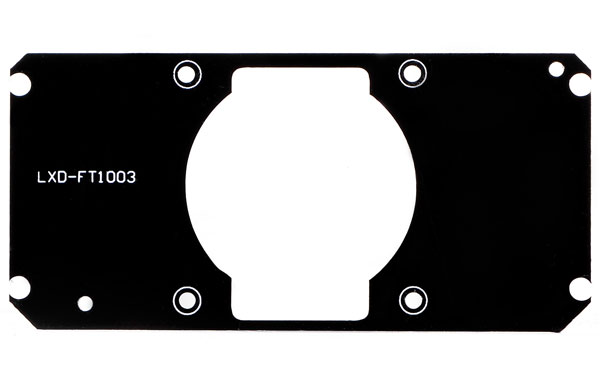
Welcome to longxiang photoelectric official website

 My position:
The aluminum substrate aluminum substrate is a metal-based copper clad plate with good heat dissipation function. Generally, the single panel is composed of a three-layer structure, which is a circuit layer (copper foil), an insulating layer and a metal base layer. Also used for high-end use is designed as a double panel, the structure is circuit layer, insulation layer, aluminum base, insulation layer, circuit layer. A very small number of applications are multi-layer boards, which can be made of ordinary multi-layer boards combined with an insulating layer and an aluminum base.
The LED aluminum substrate is the PCB, which is also the meaning of the printed circuit board. The material of the circuit board is aluminum alloy. In the past, the material of our general circuit board was glass fiber, but because the LED heat is large, the circuit board for LED lamps is generally The aluminum substrate can conduct heat quickly, and the circuit board for other equipment or electrical appliances is still a fiberglass board!
The surface of the power device is mounted on the circuit layer, and the heat generated by the device is quickly conducted to the metal base layer through the insulating layer, and then the heat is transferred by the metal base layer to achieve heat dissipation of the device.
Compared with the conventional FR-4, the aluminum substrate can reduce the thermal resistance to a low level, so that the aluminum substrate has excellent heat conduction performance; compared with the thick film ceramic circuit, its mechanical properties are extremely excellent.
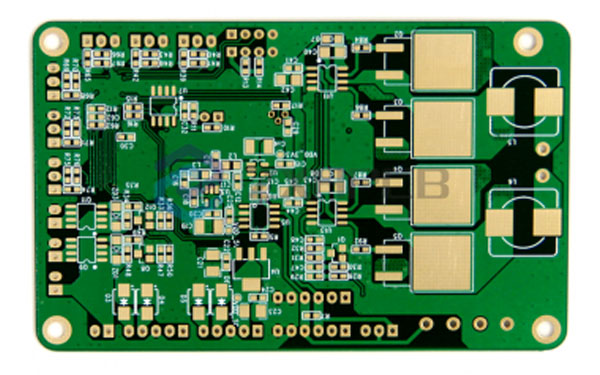
Aluminum substrates also have the following unique advantages:
Meet RoHs requirements;
More suitable for SMT process;
Extremely effective treatment of thermal diffusion in the circuit design, thereby reducing module operating temperature, extending service life, increasing power density and reliability;
Reduce the assembly of heat sinks and other hardware (including thermal interface materials), reduce product size, reduce hardware and assembly costs; optimize power circuit and control circuit combination; replace fragile ceramic substrate for better mechanical durability.
Aluminum substrate (metal-based heat sink (including aluminum substrate, copper substrate, iron substrate)) is a low-alloyed Al-Mg-Si high-plastic alloy plate (see the figure below), which has good thermal conductivity and electrical insulation. Performance and machinability, the aluminum substrate is the same thickness and the same line width compared with the traditional FR-4. The aluminum substrate can carry higher current. The aluminum substrate can withstand voltage up to 4500V and the thermal conductivity is greater than 2.0. The industry is dominated by aluminum substrates.
● Surface Mount Technology (SMT);
● extremely efficient treatment of thermal diffusion in circuit design;
● Reduce product operating temperature, increase product power density and reliability, and extend product life;
● Reduce product size and reduce hardware and assembly costs;
● Replace the fragile ceramic substrate for better mechanical durability.
The aluminum-based copper clad laminate is a metal circuit board material composed of a copper foil, a thermally conductive insulating layer and a metal substrate, and its structure is divided into three layers:
Cireuitl.Layer circuit layer: equivalent to ordinary copper clad laminate board, line copper foil thickness loz to 10oz.
DielcctricLayer insulation: The insulation is a low thermal resistance thermal insulation material. The thickness is from 0.003" to 0.006" inches, which is the core technology of aluminum-based copper clad laminates and has obtained UL certification. BaseLayer base: It is a metal substrate, usually aluminum or copper. Aluminum-based copper clad laminates and conventional epoxy glass cloth laminates.
PCB materials have advantages that are unmatched by other materials. Suitable for power component surface mount SMT public art.
No need for a heat sink, greatly reduced size, excellent heat dissipation, good insulation and mechanical properties.
The LED die substrate is mainly used as a medium for deriving thermal energy between the LED die and the system board, and is combined with the LED die by a wire bonding, eutectic or flip chip process. Based on the consideration of heat dissipation, the market for LED die substrates is mainly ceramic substrates, and the circuit preparation methods can be roughly divided into three types: thick film ceramic substrate, low temperature co-fired multilayer ceramic, and thin film ceramic substrate. For high-power LED components, a thick film or a low-temperature co-fired ceramic substrate is used as a die-dissipating substrate, and the LED die is bonded to the ceramic substrate by a gold wire. As mentioned in the introduction, this gold wire connection limits the effectiveness of heat dissipation along the electrode contacts. Therefore, major manufacturers at home and abroad are working hard to solve this problem. There are two solutions. One is to find a substrate material with high heat dissipation coefficient instead of alumina, and includes a germanium substrate, a tantalum carbide substrate, an anodized aluminum substrate or an aluminum nitride substrate, and a material semiconductor of the tantalum and tantalum carbide substrate. The characteristics make it encounter the more severe test at the present stage, and the anodized aluminum substrate is easily turned on due to the insufficient strength of the anodized oxide layer, which makes it limited in practical application, and thus, at this stage The more mature and generally accepted is the use of aluminum nitride as the heat sink substrate; however, the current aluminum nitride substrate is not suitable for the traditional thick film process (the material is required to be heat treated at 850 ° C after the silver paste printing) The aluminum substrate causes material reliability problems. Therefore, the aluminum nitride substrate line needs to be prepared by a thin film process. The aluminum nitride substrate prepared by the thin film process greatly accelerates the heat from the LED die to the system board through the substrate material, thereby greatly reducing the burden of heat from the LED die to the system board through the metal wire, thereby achieving high heat dissipation. Effect.
Longxiang circuit board is positioned in the professional manufacture of LED aluminum substrate, high-density exposure circuit board, high thermal conductivity aluminum substrate, FR4 composite board and other circuit boards. The company has a professional team engaged in the production of circuit boards for nearly 20 years, with many excellent engineers and professional management personnel, as well as a full set of automated production equipment and precision testing equipment for professional production of circuit boards (aluminum substrates, glass fiber boards). . The company's entire production process is self-sufficient, with a monthly output of 20,000-30,000 square feet per month. Products are widely used in LED commercial lighting, security camera light board, car light lighting, aircraft flashing lighting and new energy batteries.
Popular articles

- How to use the circuit board three anti-adhesive?
- Detailed analysis of the principle of lithium battery protection board
- Briefly describes the types of FPC board
- Single panel integrated circuit
- What are the common faults in printed PCB boards?
- the aluminum substrate that is indispensable for the board
Latest information
- Single panel integrated circuit
- the aluminum substrate that is indispensable for the board
- Board quality assurance needs to be considered
- What are the common faults in printed PCB boards?
- Board industry status and industry characteristics
- PCB board industry pattern and development trend
- Briefly describes the types of FPC board
- FPC board features
- Common security risks and preventive measures
- Detailed analysis of the principle of lithium battery protection board
- Teach you how to choose an aluminum substrate?
- How to use the circuit board three anti-adhesive?
- What is the material commonly used on circuit boards?
- How to distinguish the quality of ceramic circuit boards
- Ceramic circuit boards use better